Loading...
Serving Santa Barbara, CA and surrounding areas. (805) 869-0255
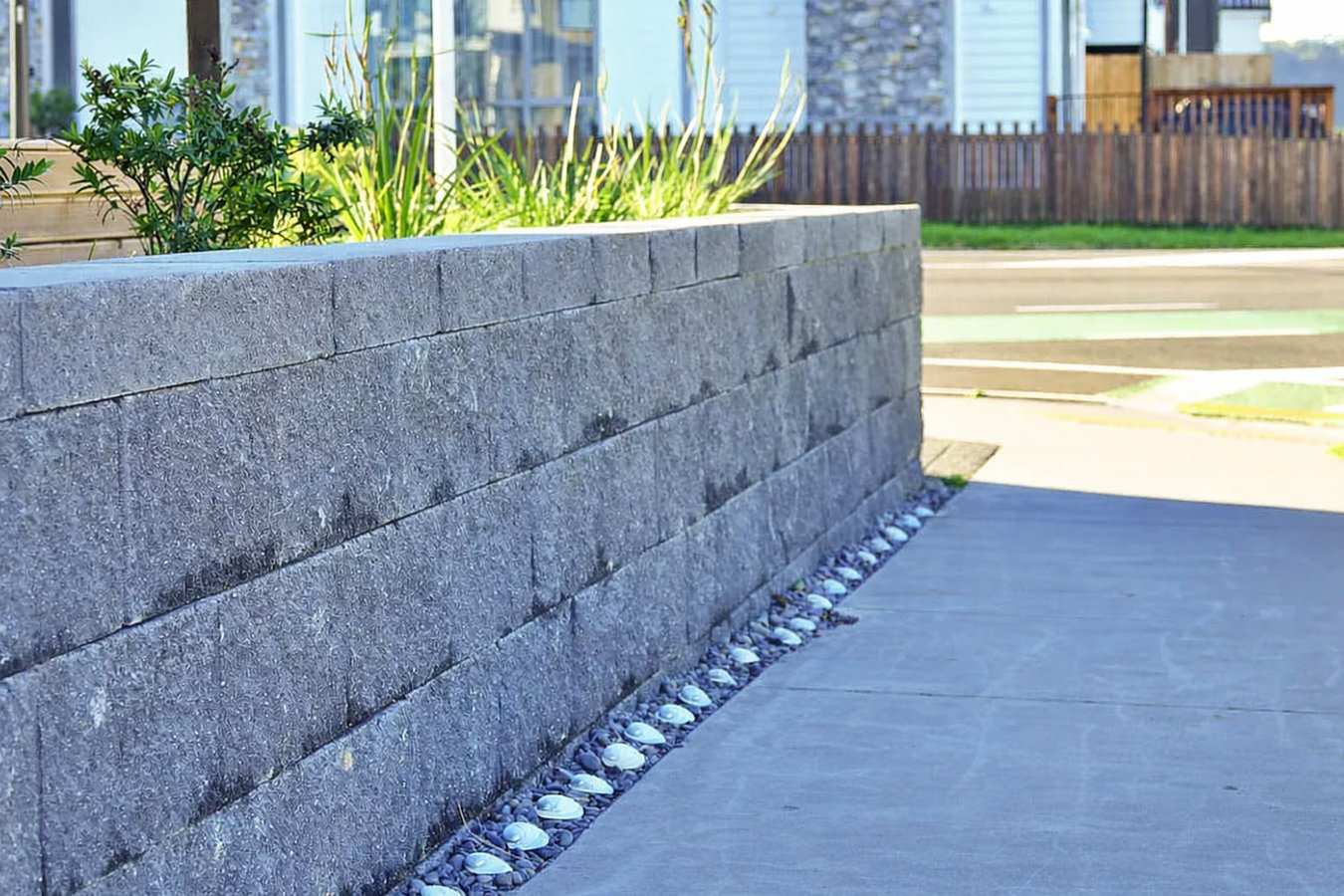
A hillside lot in Santa Barbara is an asset - until the soil starts moving. We build concrete retaining walls that hold your slope in place, protect your foundation, and create usable space where there was only a grade.
Concrete retaining walls in Santa Barbara involve excavating the slope, preparing a deep footing, placing steel reinforcement, pouring or stacking concrete, and backfilling with gravel and drainage material - most residential walls take one to several days of active work, with the permit process adding several weeks before construction begins on taller walls.
Most homeowners call us after a wet winter when they notice soil creeping onto the driveway, an existing wall starting to lean, or water pooling against the house. Santa Barbara sits between the Santa Ynez Mountains and the Pacific Ocean, and a large share of its residential neighborhoods are built on sloped terrain. Retaining walls here are routine work - not a specialty repair.
If you are also thinking about improving your outdoor surfaces, our concrete floor installation service pairs well with hillside wall projects where you want to add a level patio or usable space below the wall.
If dirt, gravel, or mulch migrates onto your driveway, patio, or walkway after rain, your slope is actively eroding. Santa Barbara's winter rains can move a surprising amount of soil in a single storm. What starts as a minor cleanup problem becomes a significant excavation job within a few seasons if left unaddressed.
A retaining wall that tilts toward the downhill side - even slightly - means soil pressure is winning. Horizontal cracks near the base are especially serious and usually signal that the wall needs full replacement, not patching. Cracks that reopen after repairs are a sign the underlying problem has not been fixed.
On Santa Barbara hillside lots, soil movement does not always announce itself. If you see new gaps between your foundation and the surrounding soil, sticking doors or windows, or cracks in stucco near grade level, a failing slope may be the cause. These signs tend to get worse after each wet season.
When a slope has no wall to hold it, water follows the path of least resistance - often straight toward your foundation. Standing water against your home after a storm, or a garage floor that gets wet from the uphill side, points to a drainage and slope-control problem that a retaining wall with proper drainage can solve at the source.
We handle every part of a retaining wall project, from the initial site visit and permit application through excavation, forming, reinforcing, pouring, and drainage installation - including block retaining wall construction where the site and design call for it. For walls over three to four feet tall, we coordinate with a licensed structural engineer to produce the drawings required by the City of Santa Barbara before a permit can be issued. Drainage is not an add-on - it is built into every wall we construct, because water pressure behind a wall is what causes most failures.
For homeowners who want to do more with their property than just hold a slope, a retaining wall is often the first step toward creating a level patio, a garden area, or a proper parking space. We work alongside our concrete footings service for projects where additional structural support is needed below the wall, and we can discuss broader hardscape plans when you are ready for that conversation.
Liquid concrete placed into forms and reinforced with steel. The strongest option for taller walls and steep hillside lots where soil loads are significant.
Individual masonry units stacked and filled with concrete. A practical choice for shorter walls where aesthetics matter and a more finished look is preferred.
For walls over three to four feet tall, we handle permit applications and coordinate with a licensed structural engineer - the approach required by the City of Santa Barbara.
Santa Barbara has two factors that make retaining walls more demanding than in most places: clay-heavy hillside soil and seismic activity. The clay soils common across the Riviera, the Upper East Side, and Mission Canyon expand when wet and shrink when dry, creating ongoing lateral pressure against any wall that holds them. The region is also seismically active - building codes here reflect that history, and walls need deeper footings and more steel reinforcement than walls built in flat, stable-soil areas. A contractor who does not account for both conditions is cutting corners you will eventually pay for.
The city also requires a building permit for walls over three feet tall and engineered drawings for taller walls - a process that adds real time to a project but protects you when you sell and in any insurance scenario. We are familiar with the City of Santa Barbara Building and Safety Division and handle the permit process on your behalf. We serve hillside homeowners throughout the area, including those in Lompoc and Carpinteria who deal with similar coastal California soil and grade conditions.
We visit your property in person before giving you any numbers. The site visit lets us see the slope, measure the wall dimensions, assess soil conditions, and identify any access challenges. You receive a written estimate within one business day of the visit - no guesses over the phone.
If your wall is over three to four feet, we coordinate with a licensed structural engineer to produce drawings, then submit those drawings to the city for a permit. Plan-check reviews can take several weeks, so the sooner you approve the estimate, the sooner the permit clock starts.
Once the permit is in hand, we mark utility lines, set erosion controls, and excavate the footing area. This is the noisiest and most disruptive phase - expect equipment on your property for at least part of a day and some disruption to landscaping near the work area.
We set forms, place steel reinforcement, and pour. After the concrete cures - at least a week - we install gravel backfill and drainage material behind the wall before compacting soil back against it. This drainage step is the one most homeowners never see, but it is what separates a wall that lasts from one that does not.
Free on-site estimate. We handle the permit and engineering. No surprises.
(805) 869-0255Santa Barbara sits in a seismically active region and its hillside soils are clay-heavy. Every wall we build accounts for both - deeper footings, more steel reinforcement, and drainage that handles the wet-dry cycle that wears out walls built to the minimum standard.
The City of Santa Barbara requires permits and engineered drawings for taller walls. We coordinate the structural engineer, submit the application, and track the plan-check process so you are never left wondering why nothing is happening. Permitted walls protect your investment and your home sale.
The most common reason retaining walls fail in Santa Barbara is water with nowhere to go. We include gravel backfill and drainage outlets in every wall - not as an upsell, but as a standard part of how we build. The American Concrete Institute, at <a href='https://www.concrete.org' target='_blank' rel='noopener noreferrer'>concrete.org</a>, identifies drainage as a primary factor in wall longevity.
We serve 12 communities across the Santa Barbara and Ventura County region. When you call, you get the same licensed crew and the same standards - whether your wall is on the Riviera or in a hillside neighborhood in one of the surrounding communities we cover.
Every one of those points is directly relevant to hillside construction in Santa Barbara. A wall built with local conditions in mind - soil, seismicity, drainage, and the permit process - is one you will not have to think about again for decades.
Add a level concrete surface below your retaining wall to create a functional patio, parking area, or yard space.
Learn moreFor walls and structures that need deeper structural support below grade, concrete footings provide the stable base everything else relies on.
Learn moreCall us today for a free on-site estimate - the dry season fills quickly, and getting the permit process started now means construction can begin before the winter rains.